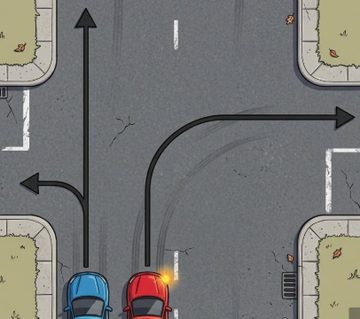
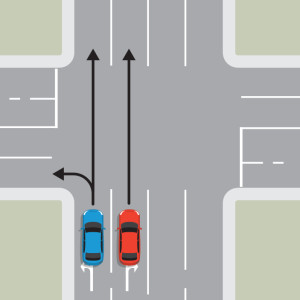
Passing another vehicle is one of the riskier things you do on the open road, because it puts you on the wrong side of the centre line with traffic possibly coming the other way. The rules below are really one idea repeated: only pass when you can see it's clear, finish it, and get back safely.
Before you pull out
Whenever you pass, have a clear enough view of the road ahead to complete the move safely, and keep an eye on the vehicle you're passing in case it changes course. Passing on the right — the usual way — needs a real gap: you must be able to see at least 100 m of clear road the whole time. If you can't, don't pass. Look well ahead for oncoming traffic and behind for anyone already passing you, signal right for at least 3 seconds, and check your blind spot before moving out.
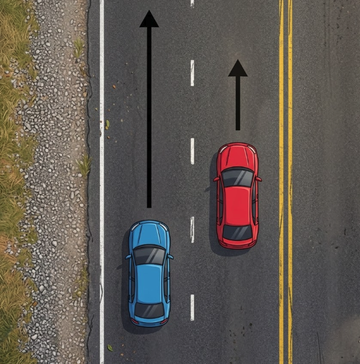
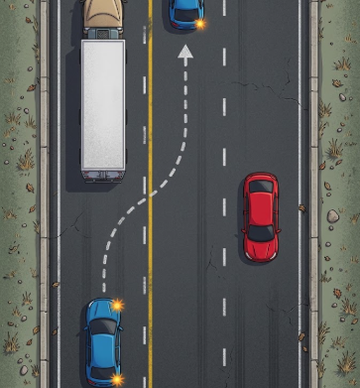
To pull back in, make sure you can see the vehicle you passed in your rear-view mirror, then signal left for at least 3 seconds before returning. When you pass cyclists, horses or pedestrians, take extra care and leave extra room — the gust from your vehicle can upset their balance.
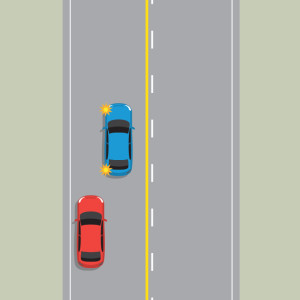
Passing on the left
You may only pass on the left in specific cases: there are two or more lanes on your side and you can do it safely in the left lane; a police officer directs you to; or the vehicle ahead has stopped, is signalling a right turn, or is turning right. At any other time you must pass on the right.
When someone is passing you
Move as far left as you safely can, and never speed up to stop them getting past. It's illegal and it turns a normal manoeuvre into a dangerous one.
No-passing lines
A no-passing line is a solid yellow line on your side of the centre line, painted where hills or curves hide oncoming traffic. Where crossing it would be needed to pass, you must not pass a motor vehicle or an animal-drawn vehicle. A broken yellow line on your side warns that a no-passing line is about to start: you may cross back over it to finish a pass, but must not cross it to start one.
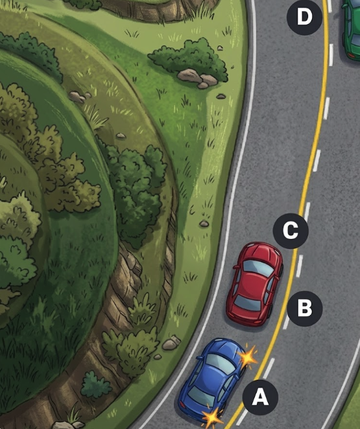
There's a narrow exception. You may pass at a no-passing line only if you can do all three at once: stay on your side of the solid yellow line, see 100 m of clear road the whole time, and the lane is wide enough for two vehicles.
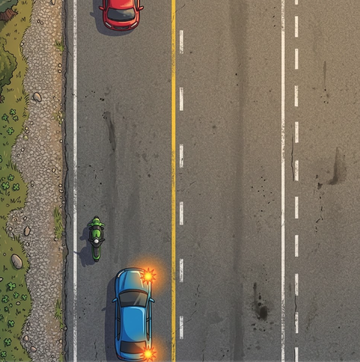
On a three-laned road, you may use the centre lane to pass only if there's no solid yellow line on your side, the centre lane is empty, and you can see 100 m of clear road — never if an oncoming vehicle is in that centre lane.
Passing cyclists
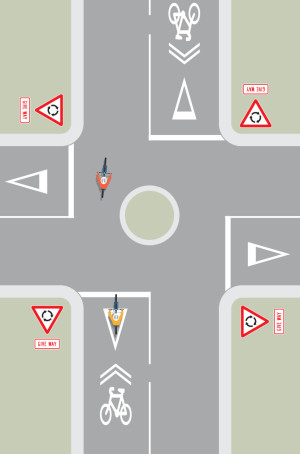
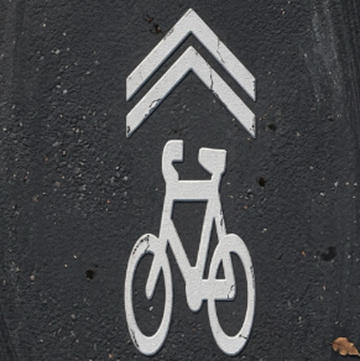
Leave at least 1.5 m when you pass someone on a bike. If you can't pass with that much room, slow down and wait behind until you can. Where a rider takes the lane — or a "sharrow" marking is painted, as at roundabouts, on narrow roads, or where car doors might open — follow at a safe distance until you can pass, or use another lane or a flush median if it's safe.
Where you must not pass
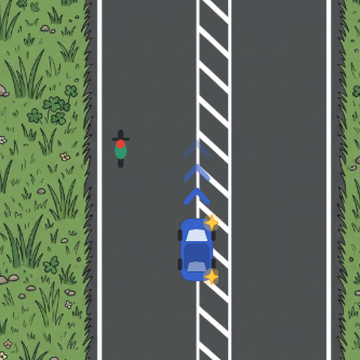
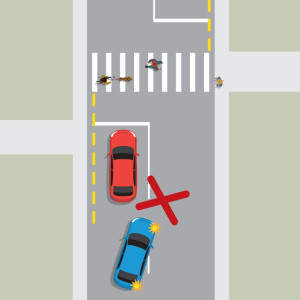
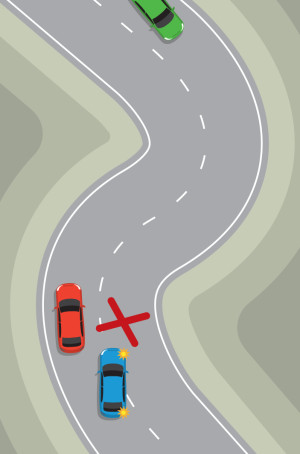
Some places are off-limits no matter how clear it looks. Don't pass a vehicle that's stopped or slowing for people at a pedestrian crossing; don't pass approaching a blind corner or curve, or wherever you can't see at least 100 m ahead; don't pass over a flush median; and don't pass within 60 m of a railway level crossing or where a vehicle has stopped for a train.
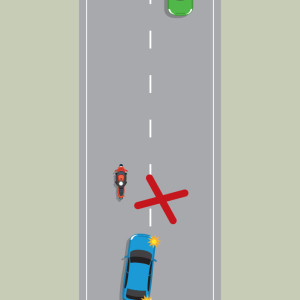
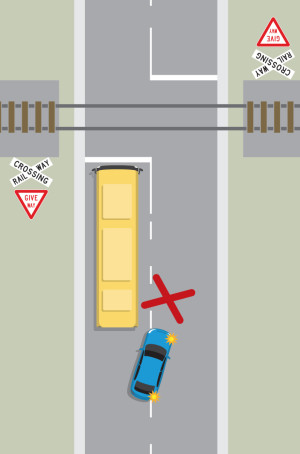
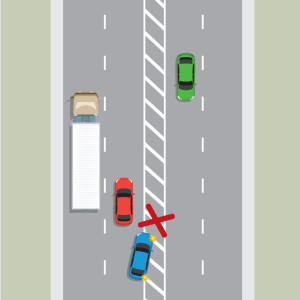
At or near an intersection, don't pass on the right of a vehicle if it means crossing the centre line, and don't get in the way of oncoming traffic or vehicles emerging from side roads.
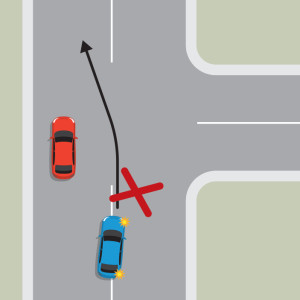
Passing at intersections
Where there's one lane on your side, you may pass on the left only if there's room in your lane and the vehicle has stopped, is signalling a right turn, or is turning right — never if it has signalled a left turn. Where there's more than one lane on your side, you may pass on the left if the vehicle is in a different lane and it's safe, and on the right if you're turning right or going straight ahead.