A low sun straight in your eyes can blind you for a few critical seconds. Sunstrike is predictable, so the trick is to expect it and be ready to cut the glare — or wait it out.
When to expect it
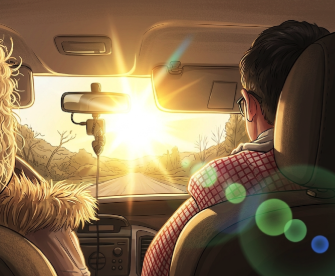
Sunstrike happens at sunrise and sunset, when the low sun hits your windscreen — especially when you're turning towards it or driving into it. It can make it hard or impossible to see, so be prepared, and take extra care in winter when the sun sits lower for longer.
Reducing the danger
Keep your windscreen clean inside and out, wear sunglasses, and use the sun visors to block the sun. If you're struck by glare and can't see, it may be safest to pull over and wait a few minutes until your eyes adjust or visibility improves.
Snow blindness
After snow has fallen and the sky is clear, sunlight reflecting off the snow can cause snow blindness, with effects much like sunstrike — so take the same care.