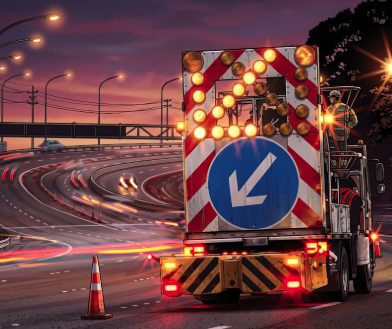
Roadworks put people on foot right beside live traffic, on a surface that may be uneven or freshly sealed. The instruction behind every roadworks sign is the same: slow down, read the signs, and be ready to stop.
Approaching roadworks
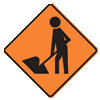
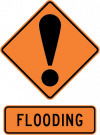
As soon as you see a roadworks sign, ease off and be ready to stop. Expect heavy vehicles and machinery, workers close to the lane, and a road surface that might be loose gravel or new seal. The orange-and-black signs are temporary warnings — a roadworks sign tells you works are ahead, and a general-hazard sign names what's coming, such as flooding.
Temporary speed limits
Where a temporary speed limit is posted at roadworks, it's compulsory — you must not drive faster than the number shown, even if the site looks quiet.
Traffic controllers
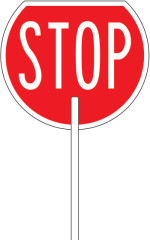
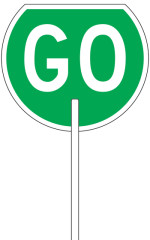
A person holding a paddle overrides the ordinary flow. A STOP paddle means stop before you reach the sign and wait; a GO paddle means you may move forward carefully. Follow their direction just as you would a signal.
Detours
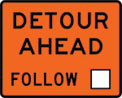
A detour sign sends you around the works — follow the detour symbols. Note each symbol's shape and colour, because one detour route can cross another and you don't want to peel off onto the wrong one.

Mobile roadworks
Some works move along the road behind an attenuator — a truck carrying a message board or illuminated arrow. When it's directing traffic, slow down and follow the arrow across to the open lane.