At night you can only react to what your headlights reach, so the whole job is about seeing further, being seen, and not blinding anyone else. New Zealand's rules on lights and speed after dark all follow from that.
When your headlights must be on
You must turn on your headlights from 30 minutes after sunset until 30 minutes before sunrise, and at any other time you can't clearly see a person or vehicle 100 m away. Never drive on park lights (position lamps) alone — they're for a parked car, not a moving one.
Dipping your lights
Dip your headlights when a vehicle is coming towards you, when you're following another vehicle, when you're approaching a police officer directing traffic, or when you're parked. Where there's plenty of street lighting you should be able to stay on dipped beam the whole way. On unlit roads, use full beam when it's appropriate to see further — just drop it again for oncoming or leading traffic.


Speed after dark
The stopping rule tightens at night. On a road with lanes, you must be able to stop within the length of clear road you can see ahead; on a road with no lanes, within half that distance. Reflective signs can trick you into thinking you can see further than you really can, so drive more slowly and carefully — especially on roads you don't know.
Staying safe
Keep your windscreen and lights clean, never wear dark glasses at night, and rest if you feel sleepy. Watch for pedestrians and cyclists, who are much harder to see, and hold a speed that lets you see at least 2 seconds ahead. If oncoming lights dazzle you, slow down or stop and keep your eyes on the left edge of the road rather than staring into the glare.
Night markers and cat's eyes
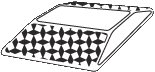
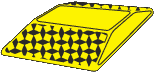
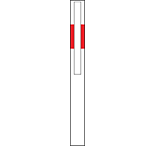
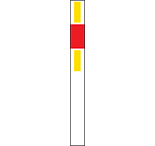
Reflective markers help you read the road when your lights catch them. The raised reflectors known as cat's eyes are colour-coded: white marks the centre line, yellow a no-passing line, and blue a fire hydrant. Edge marker posts and reflectors guide you along the sides of the road and over bridges.