Pedestrians are the most vulnerable people on the road, and children the most unpredictable. Most of the rules here come down to being ready to stop wherever people are likely to step out, and giving way properly at crossings.
Be ready to stop
Near schools, bus stops and pedestrian crossings, always be ready to stop. Take extra care passing parked vehicles, roadside stalls or vendors, where a pedestrian may walk out without warning. Passing or approaching a stopped school bus that is letting children on or off — from either side of the road — slow down to 20 km/h.
Pedestrian crossings
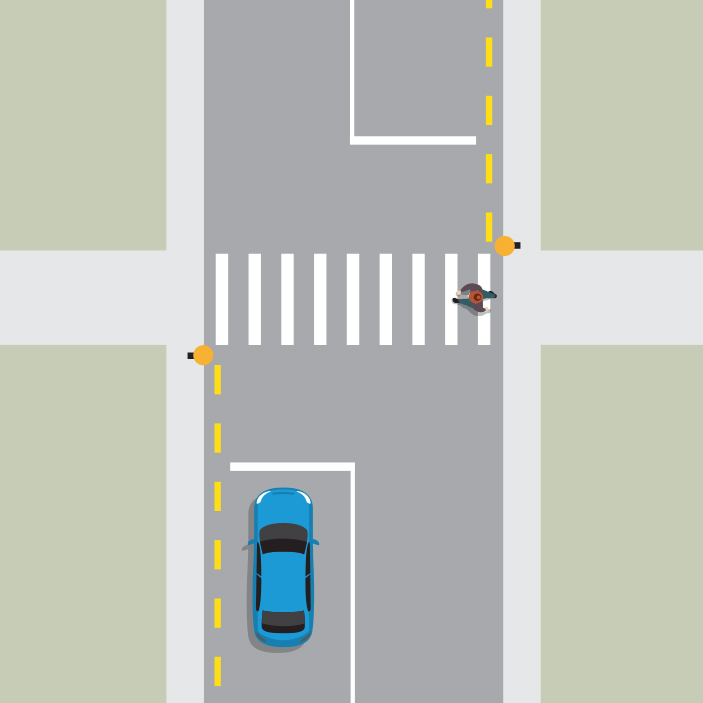
At a crossing with no raised island, slow down and stop to give way to pedestrians on any part of the crossing, including anyone stepping onto it or obviously waiting to; wait until they're completely clear before you go.
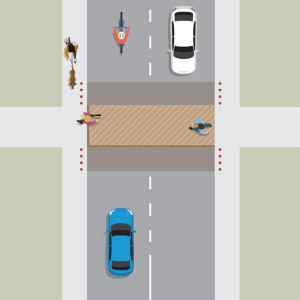
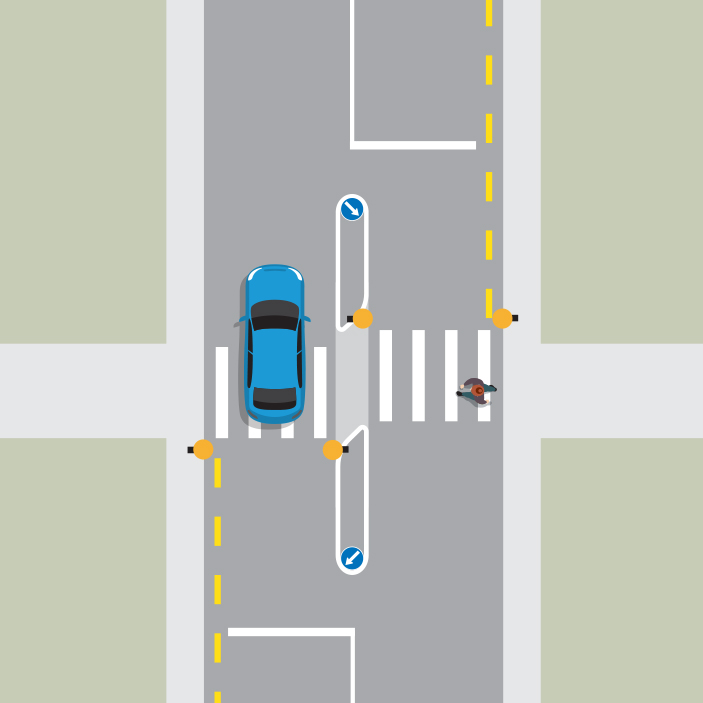
If the crossing has a raised traffic island in the middle, stop and give way to pedestrians on your half of the road. In a queue near a crossing, don't move onto it unless there's room for your vehicle to clear the other side. And never overtake a vehicle that is slowing down for a crossing — there may be someone on it you can't see.
At a courtesy crossing, be courteous to people using it, and in a shared zone give way to pedestrians.
School crossings
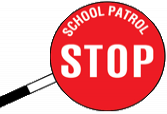
A school patrol sign means stop. At an operating school (kea) crossing, vehicles from both directions must stop until all the patrol signs are pulled in.
Children and people who need extra care
Take special care near children, especially those under nine and around 8–9am and 3–4pm: they have narrow vision, misjudge vehicle speed, may dart out or freeze, and are small and hard to see. Where a pedestrian is using a white cane or a guide dog, take extra care and let them cross in their own time.
Footpaths and driveways
Driving across a footpath in or out of a driveway or carpark, give way to people on the footpath; and when you leave a driveway, give way to vehicles on the road.